FCPS Part 1 Radiology: Radiation Physics and Safety — High-Yield Concepts
The one subject in FCPS Part 1 Radiology that doesn't overlap with the shared basic sciences — radiation units, protection principles, exposure factors and radiobiology — explained with practice MCQs.
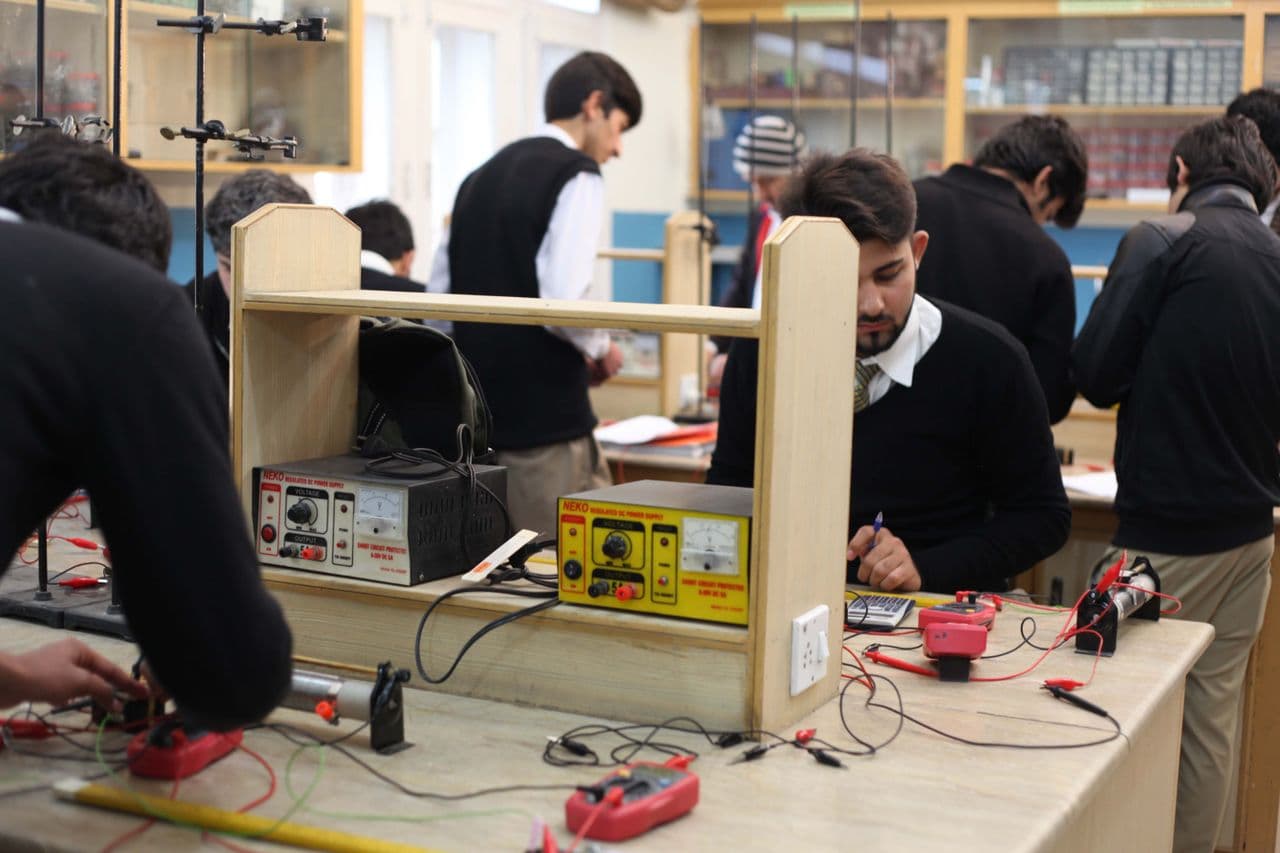
Radiation Physics and Safety is the one subject in FCPS Part 1 Radiology that doesn't overlap with the basic-sciences papers every FCPS Part 1 candidate sits — Anatomy, Pathology, Physiology, Pharmacology, Biochemistry and Microbiology are shared across specialties, but Physics is unique to Radiology. Real subject-weight data from HighYield's Radiology bank puts it at 146 questions, a meaningful independent slice that candidates often under-revise simply because it doesn't feel like "real radiology." Below is a sample across its four core areas.
SI Units of Radiation
1. The SI unit of absorbed radiation dose is the:
- A) Sievert
- B) Becquerel
- C) Gray ✅
- D) Curie
2. The SI unit that accounts for the biological harm of different radiation types (equivalent dose) is the:
- A) Gray
- B) Sievert ✅
- C) Roentgen
- D) Curie
Principles of Radiation Protection
3. ALARA, the guiding principle of radiation protection, stands for:
- A) As Low As Reasonably Achievable ✅
- B) Absolute Limit for Approved Radiation Amounts
- C) Applied Level of Acceptable Radiographic Absorption
- D) Average Level of Attenuated Radiation Activity
4. The classic three-factor framework for minimizing occupational radiation exposure is:
- A) Voltage, current, exposure time
- B) Time, distance, shielding ✅
- C) Collimation, grid, filtration
- D) kVp, mAs, source-to-image distance
5. Per the inverse square law, if the distance from a radiation source is doubled, the exposure rate falls to:
- A) One-half
- B) One-quarter ✅
- C) Double
- D) It stays unchanged
Exposure Factors & Image Quality
6. Increasing kVp on an X-ray exposure primarily increases:
- A) Beam penetration and reduces image contrast ✅
- B) Patient dose only, with no effect on the image
- C) Focal spot size
- D) Grid ratio
7. mAs (milliampere-seconds) primarily controls:
- A) Beam energy (penetrating power)
- B) The quantity of X-ray photons produced, and therefore patient dose ✅
- C) Image contrast only
- D) Scatter radiation only
Radiobiology Basics
8. The Law of Bergonié and Tribondeau states that cells are most radiosensitive when they are:
- A) Well-differentiated and slowly dividing
- B) Undifferentiated and rapidly dividing ✅
- C) Non-dividing and quiescent
- D) Highly specialized, mature cells
Why This Section Is Worth Dedicated Revision Time
Because Physics doesn't appear on any other FCPS Part 1 paper, candidates can't lean on general medical-school revision for it the way they can for Anatomy or Pathology — it has to be studied specifically for Radiology. At roughly 146 questions in HighYield's bank, it's too large a slice to leave for the last week of prep.
Prepare with HighYield
HighYield's FCPS Part 1 Radiology bank covers Radiation Physics and Safety alongside Anatomy, Pathology, Physiology and every radiology subspecialty, each question explained. Try the first 20 questions free, no sign-in required, from the FCPS Part 1 Radiology question bank page.
Want a mixed-subject sampler across the whole paper first? See Most Repeated FCPS Part 1 Radiology MCQs: High-Yield Subjects.
Ready to practise FCPS Part 1 Radiology MCQs?
Past-paper MCQs with detailed explanations for FCPS Part 1 Radiology.
Start FCPS Part 1 Radiology QBankAlso includes 4 free timed mock exams in the real FCPS Part 1 Radiology format.