A-Levels Syllabus Guide: How to Use It (Physics & Maths Focus)
How to read and use your official A-Level syllabus document effectively, with a detailed breakdown of the Physics and Mathematics syllabus structure.
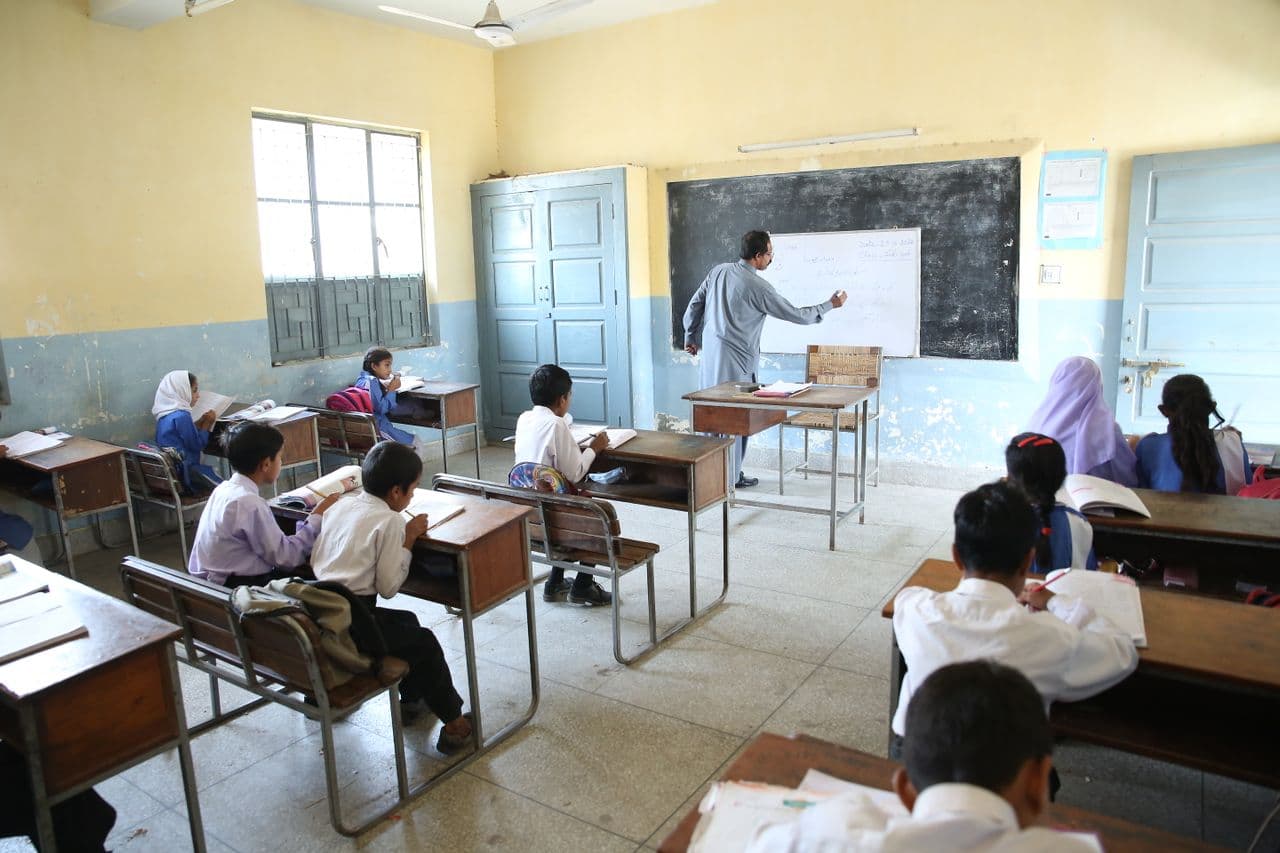
Understanding your A-Level syllabus in detail — not just the textbook chapter titles — is what separates efficient preparation from wasted study time. This guide breaks down how to read and use your official syllabus documents, with a focus on Physics and Mathematics.
Why the Official Syllabus Document Matters
Every Cambridge International and Edexcel subject has an official syllabus document that lists exactly what content is examinable, how it is weighted across papers, and what command words are used in questions. Textbooks are written to cover the syllabus but often include extra depth or slightly different emphasis - the syllabus itself is the only document that tells you precisely what can and cannot appear on your exam.
How to Read Your A-Level Syllabus
- Find your specific syllabus code. Cambridge and Edexcel both assign a unique code to each subject and exam session - make sure you are using the syllabus for your specific exam board, subject, and examination year, since content occasionally changes between syllabus versions.
- Identify the paper structure. Most A-Level subjects split content across multiple papers (e.g., multiple-choice, structured questions, essays, practical/coursework) - know which content maps to which paper.
- Note the assessment objectives. These describe what skills are being tested (knowledge, application, analysis, evaluation) and roughly what proportion of marks each carries - this tells you where to invest revision time.
- Cross-reference with past papers. Use your syllabus alongside past papers (see our A-Level past papers guide) to see exactly how each syllabus topic has been examined historically.
A-Level Physics Syllabus: Key Areas
The A-Level Physics syllabus (Cambridge and Edexcel both follow a broadly similar structure) typically covers:
- Measurement and units
- Mechanics - kinematics, dynamics, forces, work, energy, and power
- Waves and oscillations
- Electricity and electromagnetism
- Thermal physics
- Modern physics - quantum phenomena, nuclear physics, particle physics
- Practical skills and experimental techniques, assessed through dedicated practical papers or coursework depending on the exam board
Physics is heavily numerical and builds cumulatively - mechanics and measurement fundamentals from early in the syllabus resurface throughout later topics, so gaps early on compound over time.
A-Level Mathematics Syllabus: Key Areas
The A-Level Mathematics syllabus typically splits into Pure Mathematics (compulsory) and optional applied units (Mechanics, Statistics, or both):
- Pure Mathematics: algebra, functions, coordinate geometry, sequences and series, trigonometry, differentiation, integration, numerical methods
- Mechanics (if chosen): kinematics, forces, motion, momentum
- Statistics (if chosen): probability, statistical distributions, hypothesis testing
Check which applied units your specific school or exam board offers, since this varies - Mathematics is one of the A-Level subjects where course structure differs most between institutions.
Building a Syllabus-Based Study Plan
Rather than working straight through a textbook cover to cover, use your syllabus as a checklist: list every syllabus point, rate your confidence in each (1–5), and prioritise revision toward your lowest-confidence areas first. This targeted approach is significantly more time-efficient than uniform revision across all topics equally.
From Syllabus Mastery to MDCAT/ECAT
If your A-Level Physics, Chemistry, or Mathematics syllabus is building toward MDCAT or ECAT, the core scientific concepts overlap substantially with the FSc-based syllabus tested in those exams. Reinforce your syllabus knowledge with active MCQ practice on HighYield’s MDCAT QBank - detailed explanations for every question help bridge any gaps between the A-Level and FSc syllabus structures. Your first 20 questions are free.